

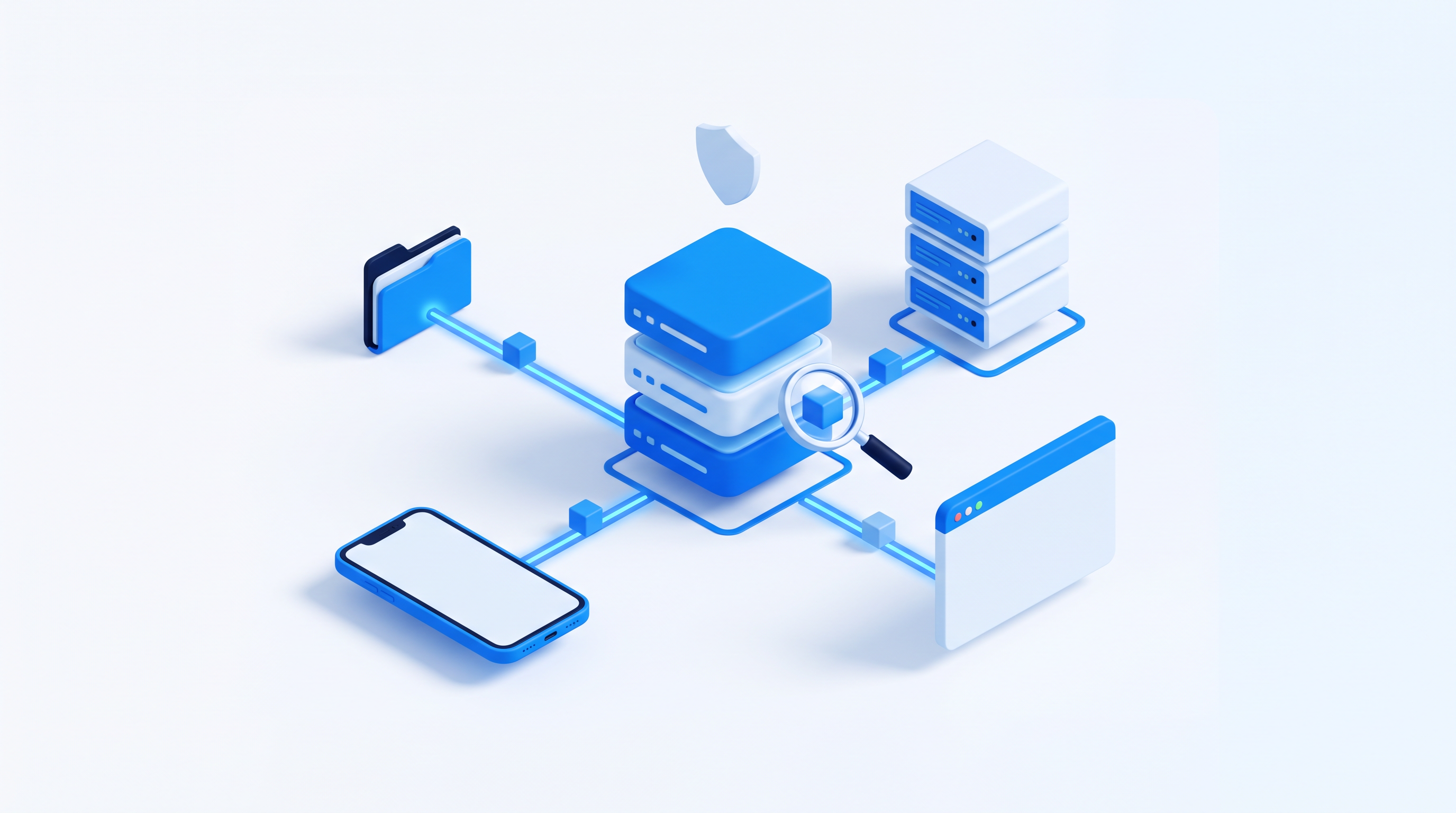
API Penetration Testing: OWASP API Top 10, Process & Findings



Quick answer: API penetration testing is an authorized security assessment of your application programming interfaces, such as REST, GraphQL and SOAP endpoints, to find weaknesses in authentication, authorization, data exposure, input handling and rate limiting. Testers follow the OWASP API Security Top 10 and test the API directly, the way attackers do, rather than only through the user interface.
APIs now carry most of the data that moves between your applications, mobile apps, partners and cloud services. They are also one of the most targeted parts of modern software, because a single weak endpoint can expose thousands of customer records. Many API flaws are invisible from the front end: the interface looks secure, while the API behind it returns data to anyone who changes an ID in a request.
This guide explains what API penetration testing covers, how it works, the most common findings and how to prepare. For testing of your APIs and applications, see Privaxi's penetration testing services.
What Is API Penetration Testing?
API penetration testing examines how an API behaves when it receives requests that a normal user interface would never send. Testers check whether each endpoint correctly identifies the caller, enforces what that caller is allowed to do, limits the data it returns and handles unexpected input safely. Testing usually combines documentation review, automated checks and extensive manual testing of business logic and authorization.
It complements web application penetration testing and mobile application penetration testing. In many modern applications, the API is where the real security decisions happen, so it deserves focused attention.
Why API Penetration Testing Matters
APIs expose data directly. They are designed to return structured data, which makes leaks efficient for attackers.
Authorization is hard to get right. Every endpoint and every object needs correct ownership and role checks.
APIs grow quickly. New endpoints, versions and integrations are added faster than they are reviewed.
Scanners miss logic flaws. Automated tools rarely understand who should be allowed to see which record.
Customers and partners ask for evidence. Enterprise buyers and integration partners often require API security testing.
Regular API penetration testing gives you evidence that your API enforces the rules your product depends on. For SaaS businesses in particular, see SaaS penetration testing.
The OWASP API Security Top 10
Most testers use the OWASP API Security Top 10 as a reference. The current list highlights these risk areas:
| Risk | What it means |
|---|---|
| Broken object level authorization | Users can access other users' records by changing an object ID |
| Broken authentication | Weak login, token or session handling lets attackers impersonate users |
| Broken object property level authorization | APIs return or accept fields a user should not see or change |
| Unrestricted resource consumption | No limits on requests, sizes or costs, enabling abuse or outages |
| Broken function level authorization | Ordinary users can call administrative functions |
| Unrestricted access to sensitive business flows | Automated abuse of flows such as sign-ups, purchases or bookings |
| Server-side request forgery | The API can be tricked into making requests to internal systems |
| Security misconfiguration | Unsafe defaults, verbose errors or missing security headers |
| Improper inventory management | Old, undocumented or test API versions remain exposed |
| Unsafe consumption of APIs | Trusting data from third-party APIs without validation |
A thorough API penetration testing engagement maps each finding to these categories so developers can understand and prioritize them.
What API Penetration Testing Covers
| Area | Questions the test should answer |
|---|---|
| Authentication | Are tokens, keys and sessions issued, validated and expired correctly? |
| Object-level authorization | Can a user read or change records that belong to someone else? |
| Function-level authorization | Can a regular user call admin or internal endpoints? |
| Data exposure | Do responses include fields that should be hidden, such as internal IDs or personal data? |
| Input handling | Does the API safely handle unexpected, oversized or malformed input? |
| Rate limiting | Are there limits on login attempts, expensive queries and bulk requests? |
| Business logic | Can workflows such as refunds, discounts or approvals be abused? |
| Versioning and inventory | Are old or undocumented endpoints still reachable? |
| Error handling | Do errors reveal stack traces, queries or internal details? |
| Transport security | Is all traffic encrypted and are certificates validated? |
REST, GraphQL and SOAP Testing Differences
REST APIs expose many endpoints, so testers focus on authorization across each route and object. GraphQL APIs expose a single endpoint with a flexible query language, which shifts attention to field-level authorization, query depth and complexity limits, and whether introspection reveals more than intended. SOAP and other XML-based APIs need careful checks on XML parsing and schema validation. A good API penetration testing plan adapts its approach to the API style you use.
The API Penetration Testing Process
Scoping. Agree on API base URLs, versions, environments, user roles and any rate limits or sensitive endpoints.
Documentation review. Study the OpenAPI or GraphQL schema, Postman collections and authentication flows.
Discovery. Map all reachable endpoints, including undocumented or legacy ones.
Authentication testing. Check token issuance, validation, expiry, revocation and key handling.
Authorization testing. Test every important endpoint with different roles and other users' object IDs.
Input and logic testing. Send unexpected values, large payloads and out-of-order requests to test validation and business rules.
Reporting. Document each finding with request and response evidence, impact and fixes.
Retest. Verify that fixes work and have not introduced new issues.
Most of the value in API penetration testing comes from the manual authorization and logic testing in steps five and six. Read penetration testing methodology for how API testing fits into recognized frameworks.
Common API Penetration Testing Findings
| Finding | Impact | Typical fix |
|---|---|---|
| Object IDs not checked against the caller | Data from other customers exposed | Server-side ownership checks on every request |
| Admin endpoints callable by regular users | Privilege escalation | Role checks enforced centrally on the server |
| Excessive data in responses | Personal or internal data leaks | Return only the fields each client needs |
| Mass assignment | Users set fields such as role or price | Allowlist writable fields |
| Missing rate limits | Credential stuffing, scraping or cost abuse | Rate limits and quotas per user and per key |
| Long-lived or unrevoked tokens | Stolen tokens stay useful | Short-lived tokens with rotation and revocation |
| Exposed legacy API versions | Old flaws remain reachable | Inventory and retire unused versions |
| Verbose error messages | Internal details leak to attackers | Generic errors with server-side logging |
Fixes for these issues are usually straightforward once identified. For a structured way to fix and verify them, see penetration testing remediation.
How to Prepare for API Penetration Testing
Share API documentation, such as an OpenAPI specification, GraphQL schema or Postman collection.
Provide test accounts for every role, ideally two accounts per role to test cross-account access.
Use a staging environment that mirrors production where possible.
Seed realistic test data so testers can exercise real workflows.
List third-party integrations and any endpoints that trigger real-world actions, such as payments or emails.
Agree on rate limits and testing windows to avoid disruption.
Name a developer contact who can answer questions during testing.
Good preparation makes API penetration testing faster and deeper, because testers spend time on security issues rather than access problems.
How Long Does API Penetration Testing Take?
A small API with a handful of endpoints and one or two roles may take 3 to 5 days of testing. A large API with many endpoints, roles and complex business logic can take 1 to 2 weeks or more. Reporting and retesting add time afterward. See how long does a penetration test take for typical timelines across test types.
How Much Does API Penetration Testing Cost?
The main cost drivers are the number of endpoints, the number of user roles, the complexity of business logic, the API style and whether the API is tested alone or together with web and mobile front ends. Combining API testing with application testing in one engagement is often more efficient. For a full breakdown, read our guide to penetration testing cost.
How Often Should APIs Be Tested?
Test before major releases, after significant changes to authentication or authorization, when adding new integrations and at least once a year. Teams that ship API changes every week often move to continuous testing aligned with their release cycle, delivered through penetration testing as a service. That way API penetration testing keeps pace with development rather than lagging months behind.
API Security Testing in the Development Pipeline
Contract testing: validate requests and responses against the API specification in every build.
Automated security checks: run API-aware scanners in staging to catch common issues early.
Authorization unit tests: add tests that confirm users cannot access other users' objects.
Inventory tracking: keep a live list of all API versions and endpoints.
Manual testing: schedule expert testing for major releases and sensitive features.
Automated checks catch regressions, but they do not replace manual API penetration testing, which finds the logic and authorization flaws that matter most.
API Penetration Testing for Compliance
APIs that handle payment, health or customer data fall within the scope of most compliance frameworks. PCI DSS expects testing of systems in the cardholder data environment, HIPAA programs look for protection of health data, and SOC 2 auditors expect testing of in-scope systems. See PCI DSS 11.4 penetration testing, HIPAA penetration testing and SOC 2 penetration testing requirements for framework-specific guidance.
Choosing an API Penetration Testing Provider
Ask for examples of authorization and business logic findings, not just scanner results.
Confirm experience with your API style, such as REST, GraphQL or gRPC.
Check that reports include full request and response evidence for each finding.
Make sure testing covers every role and cross-account access.
Confirm whether retesting is included.
Our guide to choosing a penetration testing company lists more questions to ask, and penetration testing report explains what a good deliverable looks like.
Signs Your API Needs Testing Now
You recently launched a public API, partner integration or mobile app.
Your API has grown to many endpoints and nobody has a complete inventory.
You changed how authentication, tokens or user roles work.
An enterprise customer or partner asked for API security evidence.
You store or process payment, health or other regulated data through the API.
Your last test only covered the web interface, not the API behind it.
If two or more of these apply, schedule API penetration testing before your next major release rather than after it.
API Penetration Testing for Startups and Growing SaaS Teams
Early-stage teams often build APIs quickly and add security later. A focused first API penetration testing engagement can still deliver strong value: prioritize authentication, object-level authorization on endpoints that return customer data, and any endpoints that move money or change account settings. Fix critical issues before they reach enterprise customers, then expand coverage as the API grows. A clean test report also shortens security reviews with larger buyers, which can help close deals faster.
Frequently Asked Questions About API Penetration Testing
What is API penetration testing?
API penetration testing is an authorized security assessment of REST, GraphQL or SOAP APIs to find weaknesses in authentication, authorization, data exposure, input handling and rate limiting.
What standard is used for API penetration testing?
Most testers follow the OWASP API Security Top 10, which covers risks such as broken object level authorization, broken authentication and unrestricted resource consumption.
How is API testing different from web application testing?
Web application testing goes through the user interface, while API testing sends requests directly to the API, including requests the interface would never send. Many serious flaws are only visible this way.
How long does an API penetration test take?
A small API often takes 3 to 5 days of testing, while large APIs with many endpoints and roles can take one to two weeks or more.
What do I need to provide for an API penetration test?
API documentation such as an OpenAPI specification, test accounts for each role, a staging environment, realistic test data and a developer contact.
How often should APIs be penetration tested?
Before major releases, after significant authentication or authorization changes and at least annually, with continuous testing for fast-moving teams.
Final Thoughts
API penetration testing protects the layer where most of your data actually moves. Test every endpoint with every role, fix authorization and data exposure issues first and retest before release.
To scope API penetration testing for your REST or GraphQL APIs, talk to Privaxi's penetration testing services team.
Related Articles


Secure Your Business's Future
Contact us today for a personalized consultation and see how we can tailor a security solution that fits your business needs perfectly.
